
UKI vs AKC agility
By Tania, Co-Founder of Happy Dog League Published October 9, 2026
Moose and I run both AKC agility and UKI agility. UKI is a bit more running, the courses are more spread out, and you’ll see more backsides, but I wouldn’t call any of it out of reach for a team that already runs AKC.
The differences that take longer to learn are in the rules: how a run qualifies, how titles are earned, and where your dog starts. Here is all of it side by side, checked against both rulebooks.
AKC and UKI at a glance
| Topic | AKC | UKI |
|---|---|---|
| How you earn a title | Qualifying runs. Three in a class earn the Novice, Open, and Excellent titles. | Points. Collect enough at your level and you earn its title and move up. |
| Levels | Novice, Open, Excellent, Master | Beginners, Novice, Senior, Champion |
| A run that counts | Novice and Open Standard forgive a refusal or two. From Excellent up, any course fault is an NQ. | A clear round: no course faults and no time faults. |
| Main classes | Standard and Jumpers With Weaves | Agility and Jumping |
| Other classes | FAST, Time 2 Beat, Premier | Speedstakes, Gamblers, Snooker, Power & Speed |
| Space between obstacles | Recommended: at least 15 to 18 feet, and 18 to a jump | Required: at least 18 feet |
| Training in the ring | For Exhibition Only (FEO), if the club offers it. 45 seconds, and you keep hold of the toy. | Not For Competition (NFC) in any class you can enter. Standard course time, toy and a helper allowed. |
| Minimum age | 15 months | 18 months, or 15 months for Speedstakes and Nursery |
| A lower jump option | Preferred, 4 inches lower | Select, one height lower |
What it feels like on course
My honest version: UKI is a bit more running. The courses are generally more spread out, there are more backsides, and some of what they ask for is harder. If you’ve run AKC Premier, you already have a good picture of it.
People also say you need a lot of distance for UKI. I don’t think you need more than you do in AKC. It’s nice to have, and it’s fine if you don’t.
The rulebooks back up the “more spread out” part. UKI requires at least 18 feet between obstacles. AKC only recommends its spacing, and the recommendation starts lower, at 15 to 18 feet, with 18 feet to a jump.
What counts as a qualifying run
In AKC, the lower levels give you some room. A Novice Standard run can still qualify with up to two refusals and one wrong course, and Open Standard allows one of each. From Excellent up, any course fault is a non-qualifying run.
In UKI, the run that earns points is a clear round, which means no course faults and no time faults. So an AKC team used to Novice or Open has less room for error in UKI, and a team already running Master is used to that standard.
How titles work in each
This is the part that trips people up when they run both, because the two count different things.
AKC counts qualifying runs. Each class has its own titles, and Standard and Jumpers With Weaves climb side by side.
| AKC level | Standard title | Jumpers title | What it takes |
|---|---|---|---|
| Novice | NA | NAJ | 3 qualifying runs each |
| Open | OA | OAJ | 3 qualifying runs each |
| Excellent | AX | AXJ | 3 qualifying runs each |
| Master | MX | MXJ | 10 qualifying runs each |
The championship, MACH, takes 750 points and 20 double Qs, where a double Q is qualifying in Master Standard and Master Jumpers With Weaves on the same day.
UKI counts points. You collect them at the level your dog is in, and when you have enough, your dog earns that level’s title and moves up, with the points starting again from zero. There are two programs, International and Speedstakes, and each has its own title at every level.
| UKI level | Points to finish it | International title | Speedstakes title |
|---|---|---|---|
| Beginners | 12 | BID | SSB |
| Novice | 20 | IND | SSN |
| Senior | 36 | ISD | SSS |
| Champion | 60 | IAC | CSS |
In the International program the points also have to come from the right mix of Agility, Jumping, and Games classes. The full breakdown is on the UKI agility titles page.
Moose is a good example of how different the two feel. In AKC he has his MX and MXJ, which is ten qualifying runs in each at Master level. In UKI he has his BID and SSB, which is 12 points in each program at Beginners, and he’s working on his Novice titles now.
If you’re wondering why a dog running Master in AKC is near the start in UKI, it comes down to timing. I registered Moose with UKI when he was getting close to 15 months old and I was just starting to think about trialing in AKC. My idea was that UKI would give us some extra practice. He hadn’t competed anywhere yet, so he started in Beginners. Then AKC was going really well, and we stayed with it for a while before I entered a UKI trial. UKI sets your dog’s level when you register, and what you earn in AKC afterward doesn’t change it.
One more difference worth knowing: in AKC, FAST and Time 2 Beat have their own titles and never affect your Standard or Jumpers titles. In UKI, the games count. From Novice up, an International title needs points from Games classes too.
Where your AKC dog starts in UKI
You may not have to start at the bottom. When you register your dog with UKI, the level they run in AKC Standard decides where they begin, in both programs.
| If your dog runs AKC | They start UKI in |
|---|---|
| Novice or Open | Beginners |
| Excellent | Novice |
| Master | Senior |
| MACH | Champion |
After that, only UKI results move your dog up. The rules behind this table are on the UKI page under “Where your dog starts in UKI”.
Training in the ring
Both let you use a run for training, and the details are different enough to matter.
AKC: For Exhibition Only
FEO is up to the club. If a club offers it, it has to offer it in every class. You get 45 seconds (FAST uses its own course time), you can reward with a toy as long as you keep hold of it and don’t throw it, and food isn’t allowed. AKC also has Fix and Go On, which lets you fix one obstacle once in any run and carry on, for a non-qualifying score.
UKI: Not For Competition
You can run NFC in any class your dog is eligible for, unless the trial’s premium says otherwise. You get the standard course time, you can use a toy, and you can have another person in the ring to help. Food isn’t allowed in the ring, though some trials set up a food reward area beside it. UKI has its own version of Fix and Go On too, called Repeat and Move On, which lets you repeat one obstacle once and counts as an elimination.
I haven’t used a training run with Moose yet, so I can’t tell you how either one feels from the inside.
The classes, and the UKI Masters Series
The main classes line up neatly. UKI Agility is the same idea as AKC Standard, with contacts and weaves, and UKI Jumping is the same idea as AKC Jumpers With Weaves. Speedstakes is jumps and tunnels only, and it has its own titles.
The Masters Series has no match in AKC. A Masters heat is two rounds, one agility and one jumping, with the results combined. It’s open to dogs at every UKI level, each jump height is its own competition, and the courses can run to 22 obstacles where a regular class stops at 20.
Clear rounds in a Masters heat count for level points like any other class. Doing well in heats is also one of the ways teams qualify for the Masters final at the UKI US Open. The ways in are set fresh each year, and they’re laid out in what to know about the UKI US Open.
Jump heights and age
| Jump height | AKC: dog’s height at the withers | UKI: dog’s height at the withers |
|---|---|---|
| 8 inches | 11 inches and under | 12.75 inches and under |
| 12 inches | 14 inches and under | 15 inches and under |
| 16 inches | 18 inches and under | 17.5 inches and under |
| 20 inches | 22 inches and under | 22 inches and under |
| 22 inches | Not offered | Any dog |
| 24 inches | Over 22 inches, or by choice | Any dog |
The cutoffs are close but they aren’t the same, so a dog can land in a different jump height in each. Both have a lower option too: AKC Preferred is 4 inches lower, and UKI Select is one height lower.
Age is the other thing to check with a young dog. AKC lets a dog compete at 15 months. UKI is 18 months for most classes, and 15 months for Speedstakes and Nursery.
Cost, and getting a spot
Neither one has a set price. Each trial sets its own fees, and it depends on the club and how that trial is run, so the only real numbers are the ones in the premium for the trial you’re entering.
To give you an idea, at one AKC trial I’ve entered in Massachusetts, the first run of the day was $27 and each one after that cost less, down to $19. At a UKI trial here, classes were $19 each and a Masters Series heat was $38. For me, a UKI day has come out cheaper.
Getting a spot is different too. Some AKC trials here fill within seconds of online entries opening. UKI trials are quieter, and I can always get a spot.
Should you try UKI?
Yes. If you and your dog are comfortable in AKC, you have the skills to try UKI, and it’s fun to run something that feels a little different. New things are worth trying.
Questions people ask
Is UKI agility harder than AKC agility?
The courses are more spread out and ask for a few more skills, like backsides, and points come only from clear rounds. It is close to AKC Premier in feel. A team that is comfortable in AKC can do it.
Do my AKC titles count in UKI?
No. Your dog’s AKC level decides which UKI level they start in, and after that only UKI results move them up. AKC titles and UKI titles are earned separately.
Can my dog compete in both AKC and UKI?
Yes, and plenty of teams do. The results never mix, so you end up keeping two sets of records: qualifying runs for AKC and points for UKI.
Can I train in the ring at an AKC trial?
If the club offers For Exhibition Only runs, yes, in any class. You get 45 seconds, you can bring a toy as long as you keep hold of it, and the run does not count toward a title.
Track AKC and UKI in one place
AKC counts qualifying runs and UKI counts points, and Dog Title Tracker keeps each one on its own tab for the same dog. It’s 3 months free, then $5 a month.
More on each: AKC agility title tracker and UKI agility titles and tracker.
Quick Disclaimer
Dog Title Tracker is an independent tracking tool and is not affiliated with, endorsed by, sponsored by, or officially connected to AKC, UKI, or any other dog sport organization.
Rules change. Always check the current AKC agility regulations and the UKI rules before you enter.
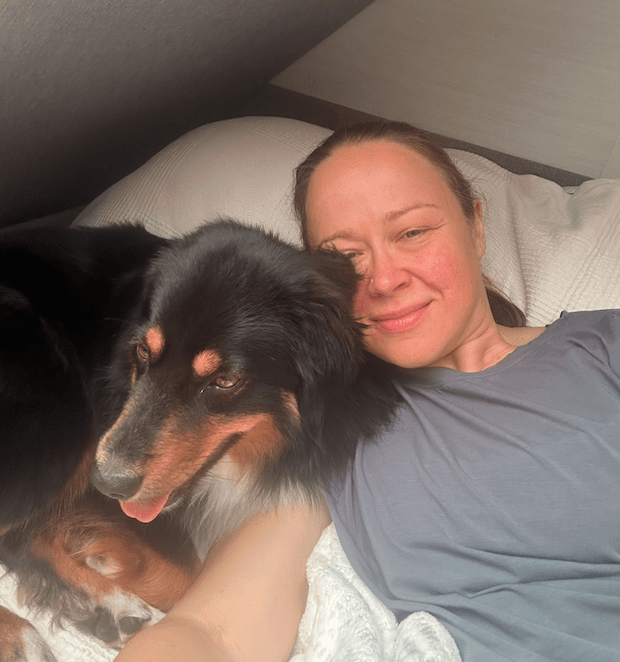
About the Author
Tania, Co-Founder of Happy Dog League
Tania writes every article on the Happy Dog League blog. She started dog sports with Tucker in 2021 and now competes with Moose, a Miniature American Shepherd, in AKC, UKI, and ASCA agility. Together they also participate in Fast CAT, Barn Hunt, dock diving, and herding classes, and Rally is next on their list. Tania regularly attends seminars and workshops to keep learning about different dog sports and brings that firsthand experience to her writing and the title tracker.
More about Tania