
ISC vs AKC Agility
By Tania, Co-Founder of Happy Dog League Published October 18, 2026
At the Master level in regular AKC agility, a run has to be perfect to earn a Q, so one knocked bar means no Q. ISC adds up faults instead, so that same knocked bar costs 5 faults and your dog can still walk out with a ribbon.
Below are the main differences between the two, plus a handful of rules AKC handlers may not expect the first time they run ISC.
AKC and ISC at a Glance
Regular AKC here means Master Standard and Jumpers With Weaves, since that's the level most handlers compare ISC with. Every row comes from the AKC agility regulations.
| Rule | Regular AKC (Master) | ISC |
|---|---|---|
| What a run can earn | A Q, toward titles, MACH points and double Qs | A placing. No Qs, legs or titles |
| How a run is scored | Start at 100 and lose points. Master needs a perfect 100 | Start at 0 and add faults |
| Who places | Only dogs that Q, best score then fastest time | Fewest faults, then fastest time. Dogs with faults can place |
| Knocked bar | NQ | 5 faults |
| Missed down contact | NQ | 5 faults |
| Refusal or run-out | NQ at Master | 5 faults each, and three is an elimination |
| Wrong course | NQ at Master, but the run goes on | Elimination |
| Time faults | Any time over at Master is an NQ | 1 fault for each full second over |
| Course time | Set by a fixed speed for each height | The judge picks a speed within a range |
| Dog walk and seesaw contact zones | 42 inches | Same equipment, but only the last 36 inches count, usually marked with tape |
| Tunnels | Up to 3 passes in Standard, 2 in Jumpers | Up to 5 passes |
| Who can enter | Master needs the Excellent titles first | Any AKC dog, at any of the three levels |
| Jump heights | Your AKC height, Regular or Preferred | Your AKC height or your FCI height. No 24C, no Preferred class |
ISC Course Times Are Tighter
In regular AKC the course speed for each height is set in the rules. In ISC the judge picks a speed from a range AKC gives, and even the slowest speed in that range is faster than the Master speed for the same height. So a dog that makes Master time with a little to spare can still pick up time faults in ISC.
| Height | Master Standard | ISC Agility | Master Jumpers | ISC Jumping |
|---|---|---|---|---|
| 8 in | 2.50 | 2.75 to 3.50 | 3.05 | 3.50 to 4.00 |
| 12 in | 2.70 | 2.75 to 3.50 | 3.25 | 3.50 to 4.00 |
| 16 in | 2.85 | 3.00 to 3.75 | 3.50 | 3.75 to 4.25 |
| 20 in | 3.10 | 3.50 to 4.25 | 3.75 | 4.00 to 4.50 |
| 24 in | 2.90 | 3.50 to 4.25 | 3.55 | 4.00 to 4.50 |
All speeds are in yards per second. The course time is the length of the course divided by the speed, so a faster speed means less time. In ISC, dogs jumping 8 and 12 inches share the same course time.
Calls That Surprise AKC Handlers
These are the ones people usually learn in the ring, which is a fine way to learn and a less fine way to finish a run.
A Wrong Course Is an Elimination
In regular AKC Master a wrong course is an NQ. In ISC it’s an elimination. Either way you can usually get back on course and finish the run.
A Weave Pop-Out Costs 5, Once
After a correct entry, the first missed pole is 5 faults, and only once per set. Your dog still has to go back and finish the poles.
The Broad Jump Is Forgiving
Only knocking a board fully over is a fault. Walking on the boards or stepping between them is fine, but going across from the side, or not all the way across, is a refusal.
Contacts Work Differently
On the same dog walk and seesaw, only the last 36 inches count as the contact zone. Leaving a contact before starting down is a refusal, and the dog has to go back and do it.
No Panel Jump
Every bar jump has wings and a single bar, and the panel jump isn’t allowed in ISC at all.
Some Maps Stay Secret
At a regular trial you usually get the course map on the day. At World Team Bye classes it isn’t handed out until the ring crew starts building the course, so you see it later than usual.
When Your Dog Jumps Higher in ISC
In ISC you choose between your dog's AKC height and its FCI height. The FCI categories are cut at different places from AKC's, so some dogs move up a height when they jump their FCI height. Here's every size, measured at the withers, with the rows where the ISC height is higher in bold:
| Dog measures | AKC height | FCI height in ISC |
|---|---|---|
| 11 in or under | 8 in | 12 inHigher |
| Over 11 in, up to 13 3/4 in | 12 in | 12 in |
| Over 13 3/4 in, up to 14 in | 12 in | 16 inHigher |
| Over 14 in, up to 16 7/8 in | 16 in | 16 in |
| Over 16 7/8 in, up to 18 in | 16 in | 20 inHigher |
| Over 18 in, up to 18 7/8 in | 20 in | 20 in |
| Over 18 7/8 in, up to 22 in | 20 in | 24 inHigher |
| Over 22 in | 24 in | 24 in |
If you're only running ISC for fun, your AKC height is the easy choice. The FCI height matters when you're counting runs toward the World Team Tryouts, because only clean ISC runs at the FCI height count. There's also no Preferred class in ISC: a Preferred dog jumps its Preferred height and is placed with the Regular dogs of the height above, so a P16 dog is placed with the 20s.
Premier or ISC?
Both are where AKC handlers go for harder, more international-looking courses, but they're built for different things.
| Topic | Premier | ISC |
|---|---|---|
| What it counts toward | Premier titles (PAD and PJD) after 25 Qs, five of them in the top 25% | Nothing. It’s a placing |
| A fault | NQ, except run-outs, which aren’t judged | 5 faults, and you can still place |
| Time | Finish before the maximum course time | Time faults for every full second over |
| Feel | Harder AKC courses, judged AKC style | International-style courses, judged FCI style |
If you want a title to show for it, Premier is your class. If you want to see how your dog handles an international course and still get a placing when things go a little sideways, ISC is the friendlier ring.
Is ISC for Your Dog?
A few quick questions, and what each answer means for your entry.
Is this a weekend for MACH points or double Qs?
ISC won’t add anything to that count. Enter it for the fun and the practice, or save your dog’s legs for Master.
Does your dog love long, open lines?
ISC courses are usually built to let dogs run, so a striding dog often enjoys them.
Can you send your dog to a back side and turn them with a word?
Try Level 2 or 3. If not yet, Level 1 is a calm first look, and nobody minds.
Thinking about the World Team Tryouts?
Enter at your dog’s FCI height, at Level 2 or 3, because those are the clean runs that can count.
Running a Preferred dog?
Go for it, just know your dog is placed with the Regular dogs of the height above.
Before Your First ISC Run
- Pick a level. Any level is open to your dog, and Level 1 is a gentle first look.
- Choose your height. Your AKC height is simplest, and your FCI height is the one that counts toward the World Team Tryouts.
- Read the premium list. It says which ISC classes are offered, whether the club uses FCI-style tire, broad jump or spread jump, and whether a class is a World Team Bye class.
- Expect a quicker course time than you’re used to at Master.
- If a bar comes down, keep going. The run can still place.
- Remember that a wrong course is an elimination.
- Write the run down afterwards, with the height you jumped in the notes.
If You Go Abroad
ISC is based on FCI rules, so it's good practice for an event overseas, but a few things are stricter at a real FCI trial. Time faults are counted to the hundredth of a second, so running 3.72 seconds over costs 3.72 faults, and dogs run without a collar, which can feel strange the first time. Your dog also has to touch the up ramp of the dog walk and the A-frame with all four paws or the run is eliminated, and international FCI trials are only for dogs over 24 months with an FCI recognized pedigree. It's all in the FCI agility regulations.
Questions People Ask
Does a knocked bar NQ in ISC?
No. In ISC a knocked bar is 5 faults, and the dog can still place. In regular AKC Master it’s an NQ.
Is a wrong course an elimination in ISC?
Yes. A wrong course eliminates the run in ISC. In regular AKC Master it’s an NQ, and in Novice Standard a dog can still qualify with one. Either way the dog can finish the course.
Does ISC count toward a MACH or other AKC titles?
No. ISC classes earn no Qs, MACH points or titles. The only ISC title is ISCH, for the Finals winner at each height at the AKC ISC Championship.
Is Premier the same as ISC?
No. Premier is a regular AKC titling class where any fault except a run-out is an NQ. ISC is a placement class where faults are added up and dogs with faults can still place.
Why would my dog jump higher in ISC?
Only if you enter at your dog’s FCI height. Some dogs fall into a higher FCI category than their AKC height, and every dog that jumps 8 inches in AKC jumps 12 at FCI height.
Your ISC Runs, All in One Place
Dog Title Tracker keeps your dog's ISC runs in their own log, with faults, time and placement, right next to the AKC titles and Qs. It's free for 3 months, then $5 a month, with no charge per dog.
More on each: AKC ISC agility run log, AKC agility title tracker and UKI vs AKC agility.
Quick Disclaimer
Dog Title Tracker is an independent tracking tool and is not affiliated with, endorsed by, sponsored by, or officially connected to the AKC, the FCI, or any other dog sport organization.
Rules change. Always check the current AKC agility regulations before you enter.
About the Author
Tania, Co-Founder of Happy Dog League
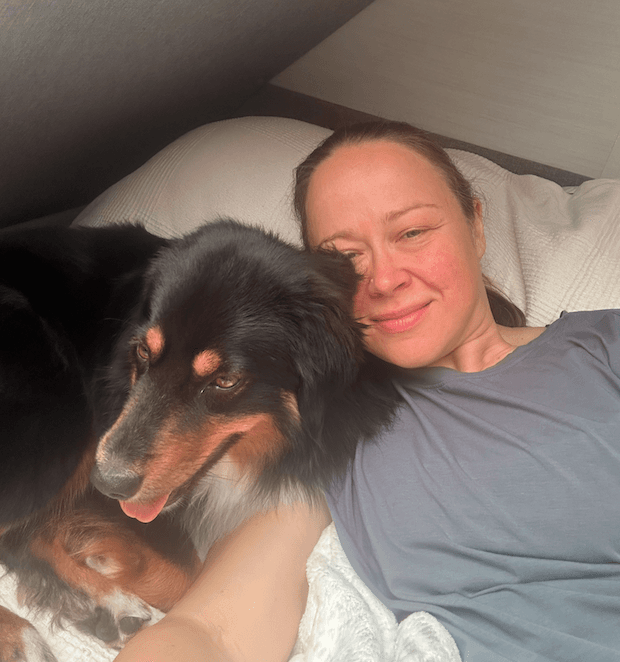
Tania writes every article on the Happy Dog League blog. She started dog sports with Tucker in 2021 and now competes with Moose, a Miniature American Shepherd, in AKC, UKI, and ASCA agility. Together they also participate in Fast CAT, Barn Hunt, dock diving, and herding classes, and Rally is next on their list. Tania regularly attends seminars and workshops to keep learning about different dog sports and brings that firsthand experience to her writing and the title tracker.
More about Tania